FRA9 FILE · Plan your trip
Transport in France
Compare trains, city transport and driving without wasting time.
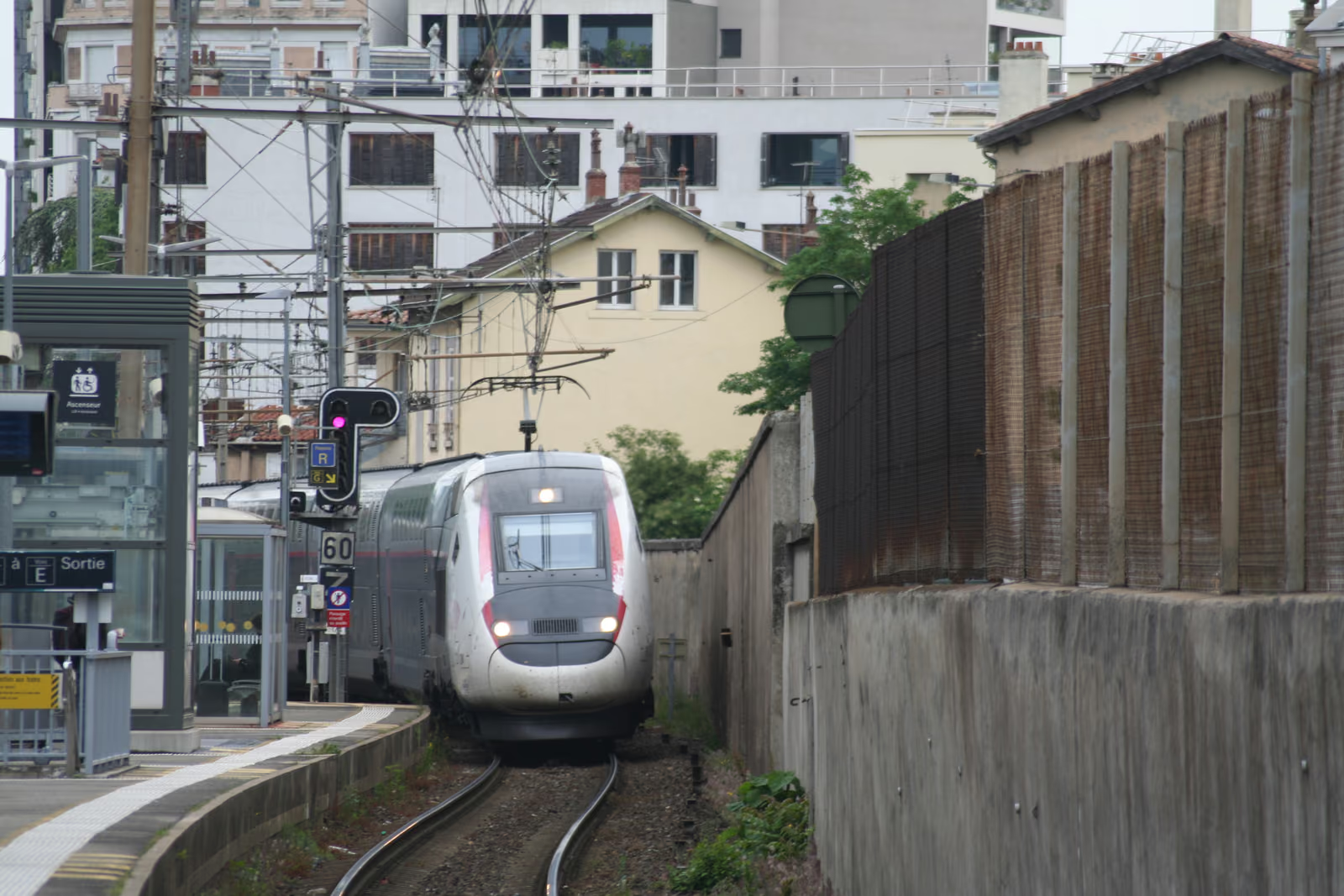
Archive photograph dated 2023-05-20 · Shadowwxx · CC BY-SA 4.0. Shadowwxx ↗
See the essentials at a glance
FRA9Editorial standardsReport a correction
Reading time estimates the main text; tables, tools, references and questions take additional time.
key points: TGV · TER · Metro · Car
Choose for the whole journey, not just the ticket
For travel between two city centres, compare rail first. Within a city, look at the local network and the walks between stops. A car is worth considering for a sequence of poorly connected villages, rather than automatically keeping one for the entire holiday. Write down your starting address, destination, luggage and actual arrival deadline. Add access to the station, connections and the final leg to your accommodation before comparing the options. A short train journey and a short door-to-door journey are not necessarily the same thing.
Which transport suits your trip?
Four situations to help you choose where to start. Then compare the whole journey and booking conditions, not just the headline fare.
| Your journey | Compare first | What could change the choice | Practical guide |
|---|---|---|---|
| Staying within a major city | Walking and local transport; choose tickets for the journeys planned. | Bags, accessibility and the last return. | Compare Paris transport tickets |
| Between two city centres | A direct train, then connecting alternatives. | Actual stations, luggage, change conditions and the final leg. | Trains in France: TGV, Intercités and TER |
| Arriving by air | Transfer from the correct airport to your address. | Terminal, airport ticket, bags and a possible overnight stay. | Paris airport transfers |
| Several villages or rural stops | Regional trains and coaches on your dates, then a rental for the days needed. | Last return, parking, tolls and local restrictions. | Driving in France |
TGV INOUI, OUIGO and TER: check the actual product
TGV INOUI, OUIGO Grande Vitesse and OUIGO Train Classique are different products. Compare the exact station, displayed journey time, included luggage, seat selection and change conditions. TER means the regional networks: ticket validity and some reservation requirements depend on the region and train. Reservation-only services in Normandy are one exception to the usual unreserved seating. A TER ticket does not replace a TGV booking. Before taking a different train, read the conditions printed on your ticket rather than assuming every regional service is interchangeable.
In Paris, choose the ticket before loading it
The Metro-Train-RER Ticket covers rail travel within its Île-de-France scope, but not bus and tram journeys or the excluded airport stations. A journey combining metro and bus therefore needs a check of the tickets for both parts. Navigo Easy is a rechargeable card, not an unlimited pass in its own right. To compare single tickets with a pass, count your actual journeys and check validity, zones and included airport access. These Paris-region products are not national rail passes.
CDG, Orly and Beauvais are separate transfers
The Paris Region <> Airports Ticket covers RER B to CDG and Metro 14 or Orlyval to Orly, but not the Beauvais Aérobus coach. On Navigo Easy it cannot coexist with a Metro-Train-RER Ticket. Check existing tickets before loading it. Then compare the transfer to your actual address, including terminal walking and baggage collection, rather than stopping the calculation at “Paris”.
A connection can mean changing stations
Read the full station name for every leg. Changing platforms in one station and crossing Paris between two stations require different arrangements. When comparing a direct train with a connecting journey, include platforms, stairs, bags and access to urban transport. If a flight is followed by a separately purchased train, check the second ticket’s conditions and keep a workable fallback for a delayed arrival. Download useful tickets and station plans before setting off; do not rely on being able to retrieve everything while moving through a busy interchange.
For villages and driving, include parking too
For a village circuit, first check the regional trains and coaches operating on your dates, then compare a rental limited to the rural days. Include fuel, tolls, parking and return conditions in the car budget. Before entering a city, check the vehicle’s Crit’Air class against the local low-emission zone’s boundary, hours and exemptions. A sticker is not permission to drive everywhere. Service-Public links to the relevant restrictions; Bison Futé also provides information about roadworks and traffic conditions. Check the actual route, not just the town where you collect the car.
Children, luggage and mobility: prepare each traveller
When travelling together with Navigo Easy, each traveller using the system needs their own card and must validate it: several tickets on one card do not admit the whole family. Check the age rules and evidence needed for a reduced fare before buying. For trains, compare the chosen product’s baggage rules and keep your ticket, identity document and discount card available. Book Assist’enGare at least 24 hours before departure to organise station assistance. A transfer between two different stations still needs separate arrangements.
Plan the return before committing to the outing
Before booking dinner, a concert or an excursion, search the return from the actual stop on the correct date. Read the operator’s traffic information before leaving, then the station screens for your train and platform. Engineering work can alter a familiar route; a saved estimate does not confirm that a service will run. Keep the ticket accessible offline and a fallback that works for everyone travelling. If driving, consult Bison Futé instead of assuming that yesterday’s journey estimate still describes the road ahead.
Editorial responsibility and change log
Publication team: FRA9 · Editorial lead: Pınar Mehmet
No completed specialist review is recorded for this page.
- — Publication content or page information changed; this date does not indicate a new source check.
- — Publication content or page information changed; this date does not indicate a new source check.
- — Publication content or page information changed; this date does not indicate a new source check.
Read next