FRA9 FILE · Plan your trip
Trains in France: TGV, Intercités and TER
Understand train types, tickets and connections across France.
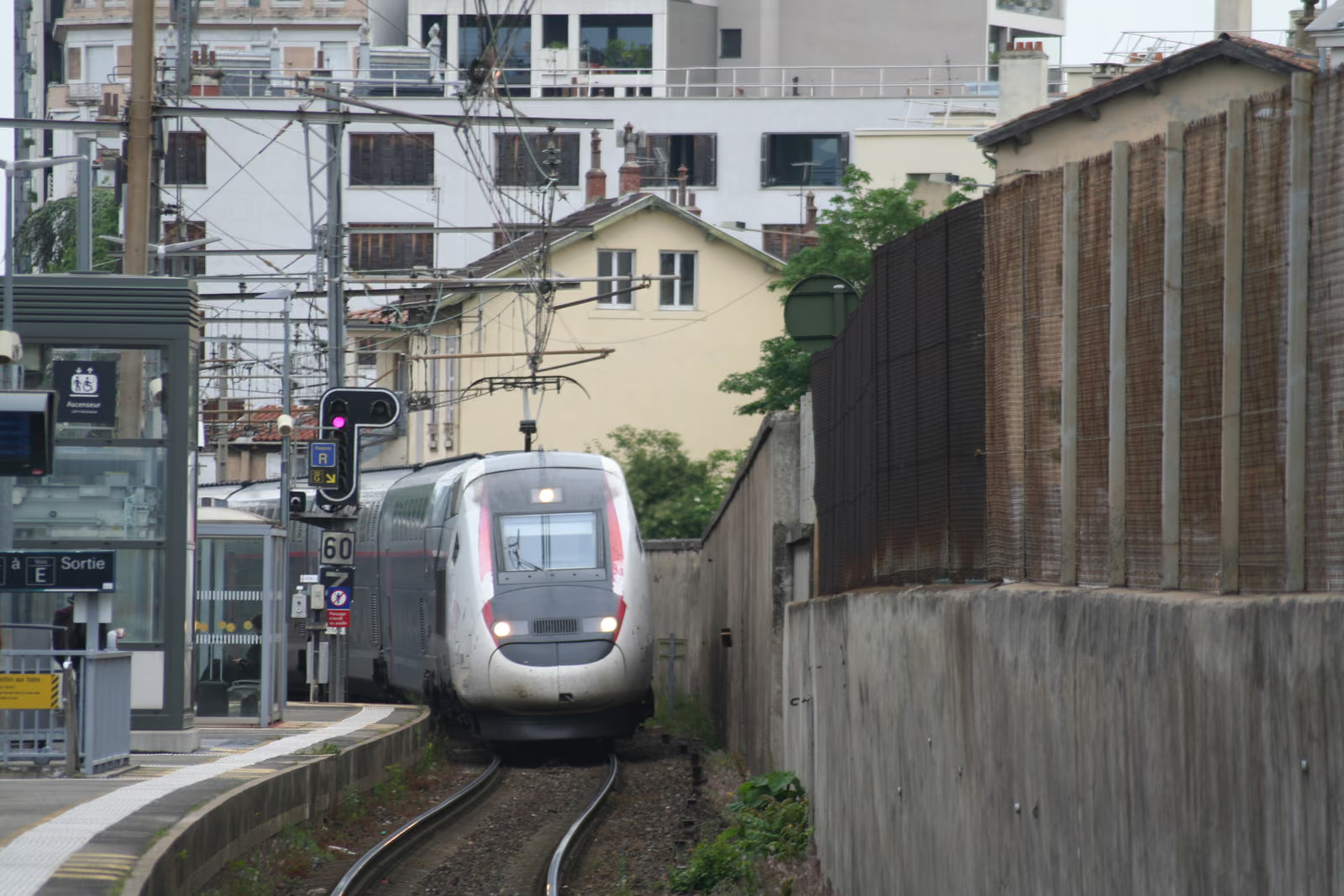
Archive photograph dated 2023-05-20 · Shadowwxx · CC BY-SA 4.0. Shadowwxx ↗
See the essentials at a glance
FRA9Editorial standardsReport a correction
Reading time estimates the main text; tables, tools, references and questions take additional time.
key points: TGV INOUI · OUIGO · Intercités · TER
Most asked questions
Where should you buy TGV tickets?
Use SNCF Connect or the operator's official channel. Verify the station, train type, luggage and exchange or refund conditions before payment.
What is the difference between TGV INOUI and OUIGO?
INOUI offers broader service and fare choices; OUIGO is lower-cost. OUIGO includes a 55 × 35 × 25cm cabin bag and a 40 × 30 × 15cm hand item, while other baggage and flexibility can cost extra; compare the final basket.
What is the difference between OUIGO PLUS and FLEX?
On Grande Vitesse, PLUS costs €9 for an extra or large bag, seat choice and advertised digital services; FLEX costs €9 for exchanges until 30 minutes before departure. Fare differences remain due and tickets are non-refundable.
Do TGV trains require reservations?
High-speed tickets are tied to a specific train and seat, and services can sell out on weekends and holidays. Choose a flexible fare if plans may change.
Choose the product before comparing price
TGV INOUI provides high-speed travel with broader services and fares; OUIGO uses a low-cost model; Intercités covers conventional routes, sometimes overnight; TER is regionally managed. One journey can combine products. Compare time, station, baggage, flexibility and connection for each segment, not just the logo or first price.
For a winter extension, compare Christmas markets in France before booking trains: an opening announcement does not establish every operating day or hour.
OUIGO Grande Vitesse or Train Classique
OUIGO Grande Vitesse uses the high-speed network; Train Classique runs on conventional lines and can take much longer while serving different stations. The brand colour is not enough: open the train details, time, exact station and duration before buying. Paris-Brussels and some domestic routes may use Train Classique.
Calculate the real ticket total
Add baggage, seat choice, PLUS or FLEX, pets, travel to the station and the last kilometre to the displayed fare. An OUIGO to an outlying station or without changes can cost more than a better-located INOUI. Compare the final basket and door-to-door time before calling a fare cheaper.
OUIGO baggage: the dimensions that trigger a charge
OUIGO includes one 55 × 35 × 25cm cabin bag and one 40 × 30 × 15cm hand item. An extra or large bag costs €5 online; the large-item limit is 130 × 90 × 50cm and 30kg. Without advance booking, the station charge is €20. A maximum of two extra or large items is accepted.
INOUI and Intercités use different baggage rules
SNCF Connect lists up to two 70 × 90 × 50cm suitcases plus one 40 × 30 × 15cm hand item for TGV INOUI and Intercités, or one suitcase, one special item and one hand item. You must carry and label everything. Never transfer these limits to OUIGO by analogy: the exact product sets the rule.
OUIGO PLUS and FLEX are not substitutes
On Grande Vitesse, PLUS costs €9 and includes an extra or large bag, seat choice and the advertised Wi-Fi or entertainment. FLEX costs €9 and allows unlimited exchanges until thirty minutes before departure, with any fare difference payable. FLEX must be added at purchase and no later than seven days before; tickets remain non-refundable.
Travelling as a family
The advertised child fare is €8 on OUIGO Grande Vitesse and €5 on Train Classique. Children aged 0–3 travel free on a lap with Toupti; a separate seat needs a ticket. PLUS and FLEX are free for under-12s when an accompanying adult buys the option. Compare the full family basket, including adjacent seats and baggage.
Book the correct station
Paris has several termini and many cities have multiple stations: Lyon Part-Dieu or Perrache, Aix centre or Aix TGV, Avignon Centre or TGV. A cheaper outlying station can add a bus, taxi and an hour. Verify the address, concourse and arrival before payment; between Paris termini, calculate a real city transfer.
Changes, delays and separate connections
The fare determines the conditions. Without FLEX, an OUIGO exchange can cost up to €19 per traveller per journey plus any fare difference; tickets and options are non-refundable. After a delay, keep the ticket and notifications and follow the official guarantee route. A separately booked flight or train is normally unprotected, so allow a real buffer.
On travel day
SNCF Connect and Gares & Connexions show live times, platforms and disruption. OUIGO recommends arriving thirty minutes early and closes train access five minutes before departure. Stay in the correct concourse, check the train number and keep ticket and ID ready. With children, baggage or reduced mobility, add the needed time rather than aiming for the limit.
Editorial responsibility and change log
Publication team: FRA9 · Editorial lead: Pınar Mehmet
No completed specialist review is recorded for this page.
- — Publication content or page information changed; this date does not indicate a new source check.
- — Publication content or page information changed; this date does not indicate a new source check.
- — Publication content or page information changed; this date does not indicate a new source check.
- — Publication content or page information changed; this date does not indicate a new source check.
- — Publication content or page information changed; this date does not indicate a new source check.
- — Publication content or page information changed; this date does not indicate a new source check.
Read next