
FRA9 FILE · Economy & expertise
Energy in France
Understand the electricity model, its strengths and transitions.
See the essentials at a glance
FRA9Editorial standardsReport a correction
Reading time estimates the main text; tables, tools, references and questions take additional time.
key points: Nuclear · Renewables · Grid · Prix
Energy and electricity are not the same system
France's energy system includes oil, gas, electricity, heat, biomass and other renewables. Electricity is overwhelmingly low-carbon, but it represented only 26% of final energy consumption in 2024; oil accounted for 39%, gas 18%, renewables 14% and heat 3%. Transport used 34% of final energy, homes 28%, industry 19%, services 15% and agriculture-fishing 4%. Separate the electricity mix from the full energy mix, and distinguish installed capacity, output and consumption before comparing figures or claiming that the economy has already moved beyond fossil fuels.
Five markers from the 2025 electricity balance
RTE records 547.5 TWh of French electricity generation in 2025, more than 95% decarbonised, with low-carbon output reaching a historic 521.1 TWh. Fossil generation fell to its lowest level in seventy-five years. Weather- and calendar-adjusted consumption remained around 449 TWh, roughly 6% below the 2014-2019 average. Abundant generation supported large exports, but it does not mean electricity is free or connection capacity exists everywhere: time, location, network limits, market price and the customer's contract still determine the practical result.
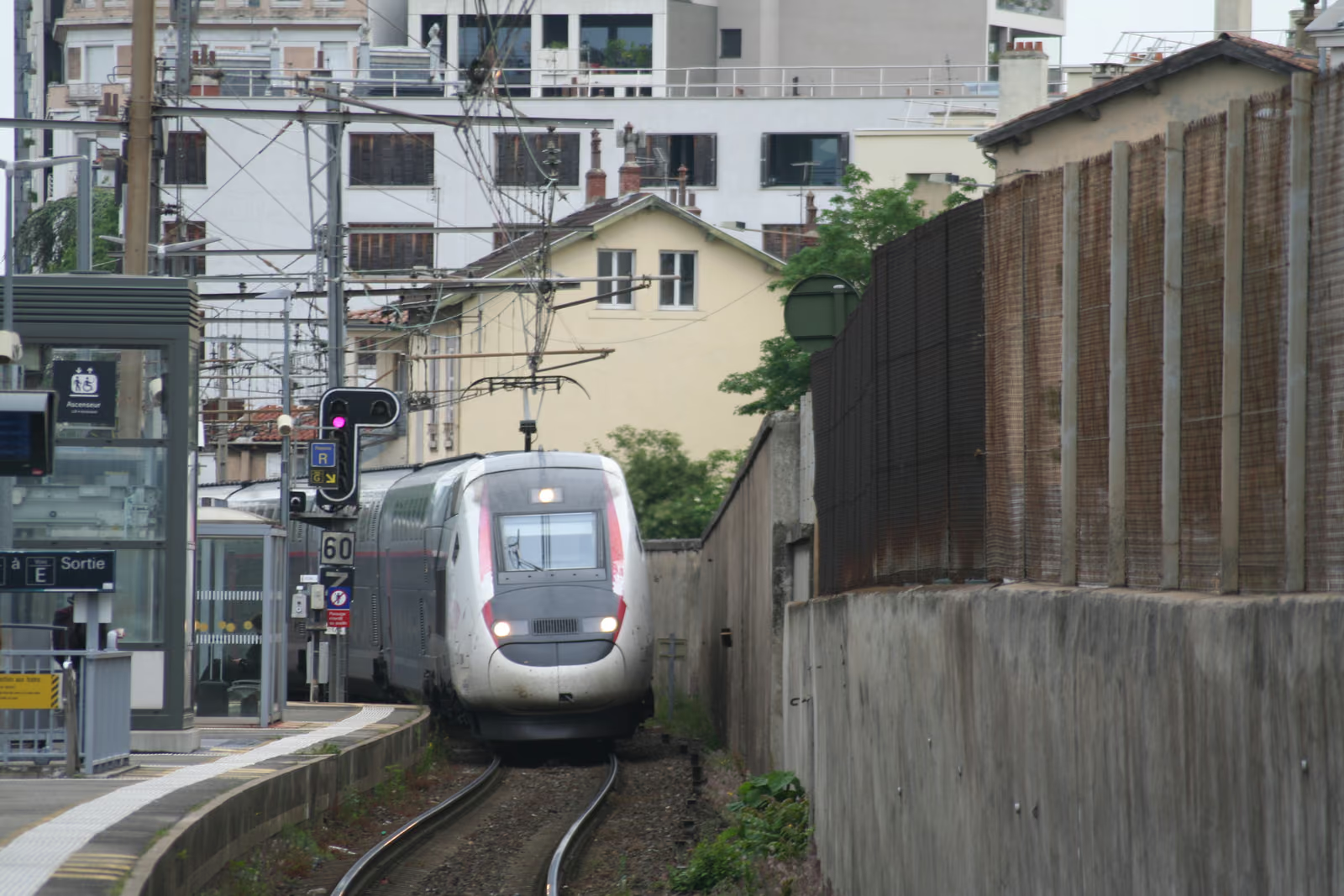

Nuclear, hydro, wind and solar perform different jobs
The nuclear fleet supplies substantial dispatchable output; hydro combines reservoirs, run-of-river production and some storage; onshore or offshore wind and solar vary with conditions; bioenergy and fossil thermal plants complete the system. An annual share does not show who balances each hour. Since 1 January 2025 civil nuclear safety has been independently supervised by ASNR, while RTE balances the electricity system. Compare actual generation, availability, flexibility, connection, system cost, lifecycle and delivery date—not only announced gigawatts—when evaluating a technology or project.
RTE, Enedis, supplier and regulator: distinct roles
RTE operates metropolitan France's high- and extra-high-voltage transmission network, linking major generators, industrial customers, distribution grids and neighbouring countries while balancing supply and demand every second. Enedis operates distribution across 95% of continental metropolitan territory on behalf of local authorities; local distribution companies cover the rest. Suppliers sell energy and bill contracts; CRE regulates markets and proposes regulated tariffs; the National Energy Ombudsman informs, compares offers and handles eligible disputes. A network outage, billing mistake and supplier switch therefore require different routes.
Read the bill before comparing the headline price
Separate the standing charge, kWh use, tariff option, subscribed capacity, TURPE network charge, taxes and optional services. A regulated tariff is not the same as a fixed, indexed or freely revised market offer. On 1 August 2026 the average regulated electricity tariff rose 2.5% including tax for about 20 million households; the official illustration for 4.5 MWh a year moves from roughly €1,046 to €1,072, an increase of €26. That average never replaces a calculation using the household's capacity, option, consumption history and exact contract.
Switch offers without confusing price and promise
Switching electricity or gas supplier is free, carries no mandatory minimum term and does not require a new meter; the new supplier arranges the transfer. Use the Ombudsman's official comparator to check estimated annual cost, the price-change formula, any fixed-price period, customer service, fees, payment method and mediation-referral rate. A discounted kWh price can be offset by the standing charge or indexation. The September 2026 gas benchmark rises 5.6% to €172.05 including tax per MWh: it is a monthly comparison reference, not a regulated tariff or a universal household bill.
PPE3: more generation alone is not enough
Published on 13 February 2026, France's third multiannual energy programme defines strategy for 2026-2035. It targets 585 TWh of decarbonised electricity in 2030 and 650-693 TWh in 2035 while expanding electrification, efficiency, grids, storage and demand response. RTE nevertheless notes that 2025 electricity consumption remained well below its pre-crisis level and was not yet aligned with reindustrialisation and decarbonisation goals. A public trajectory is not a guaranteed construction schedule or permit: projects still depend on consultation, connection, funding, acceptance, safety and supply chains.
Make a decision for a home or business
For a home, collect twelve months of kWh, subscribed capacity, Base or peak/off-peak option, heating, hot water, energy rating, occupancy and shiftable uses; then compare the offer, service quality and cancellation terms. Off-peak windows have changed progressively since November 2025, with more daytime hours possible in summer, but only the schedule assigned to the meter applies. A business must also model its load curve, peak, power quality, backup, connection lead time, written capacity and total cost. Before electrifying, distinguish genuine energy savings, time shifting and replacement of a fossil-fuel use.
Frequently asked questions
How much of French electricity was decarbonised in 2025?
More than 95% according to RTE. That describes electricity generation, not the full final-energy system, which still depends heavily on oil and gas.
Did the regulated tariff rise in August 2026?
Yes, by an average 2.5% including tax on 1 August for about 20 million households. Individual impact depends on capacity, option and use.
Does switching supplier require a new meter?
No. Switching is free, has no mandatory minimum term and does not require a meter replacement. The new supplier arranges the transfer.
Do RTE and Enedis do the same job?
No. RTE runs high- and extra-high-voltage transmission and balances the system; Enedis runs distribution across 95% of continental metropolitan France.
Are off-peak hours the same everywhere?
No. Windows are changing and depend on the meter. Use only the schedule communicated for the delivery point.
Read next


